
Pay Online

Why Is It Critical to Replace a Missing Molar Even If It’s Not Visible When I Smile?
February 16, 2026
Losing a molar often feels like a minor inconvenience rather than a dental emergency, especially since it doesn’t interrupt the “social six” teeth that people see when you laugh. You might think that as long as you can still chew reasonably well on the other side, there is no rush to fix the problem. However, the mouth functions as a finely tuned machine, with every part depending on the stability of the others. A single missing molar sets off a slow-motion chain reaction that can eventually compromise your entire bite and the youthful structure of your face.
Your molars are designed to withstand hundreds of pounds of pressure during mastication. When one is removed, the heavy workload is shifted to the smaller, thinner teeth at the front of your mouth. These front teeth were never meant to handle such force, leading to premature wear, chips, and eventual fractures. Beyond the teeth themselves, the bone that once held that molar begins to deteriorate almost immediately through a process called resorption. This loss of bone density is what leads to that “collapsed” look often associated with aging.
How Teeth Move When a Molar Goes Missing
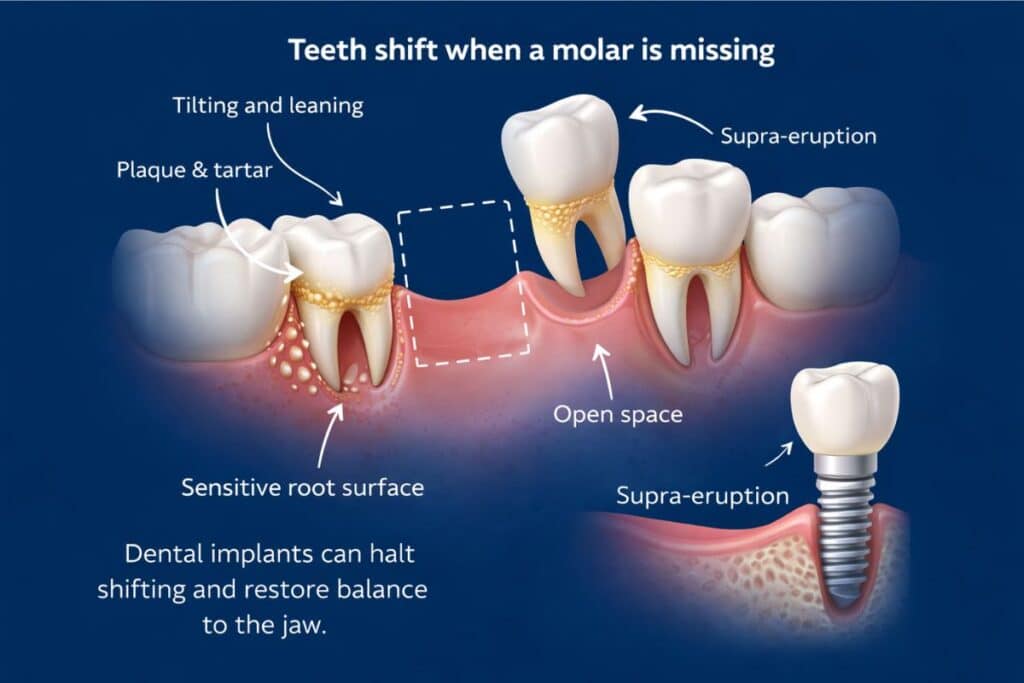
Teeth are not fixed in the jaw like fence posts in concrete; they are held in place by a delicate balance of pressure from their neighbors. Once a molar is gone, the surrounding teeth lose their “stops.” The teeth on either side of the gap will naturally begin to tilt and lean into the open space. This shifting creates hard-to-reach nooks where plaque and tartar accumulate, significantly increasing your risk of gum disease and decay on previously healthy teeth.
Perhaps even more concerning is “supra-eruption.” This happens when the tooth directly above or below the gap starts to grow out of its socket because there is no opposing tooth to bite against. This movement can expose the sensitive root surface of the erupting tooth. It can disrupt the way your upper and lower jaws fit together. Many patients who have ignored a missing back tooth for years eventually visit us, complaining of unexplained headaches or clicking in the jaw. For those looking for a permanent solution, exploring dental implants in Elgin is often the most effective way to halt this shifting and restore balance to the jaw.
The Biological Cost: Jawbone Atrophy and Facial Change
The relationship between your teeth and your jawbone is symbiotic. The bone requires the constant stimulation of chewing forces to remain dense and strong. When a molar is missing, the body perceives that the bone in that area is no longer needed and begins to resorb the minerals. Within the first year of losing a tooth, you can lose about 25% of the bone width in that specific area.
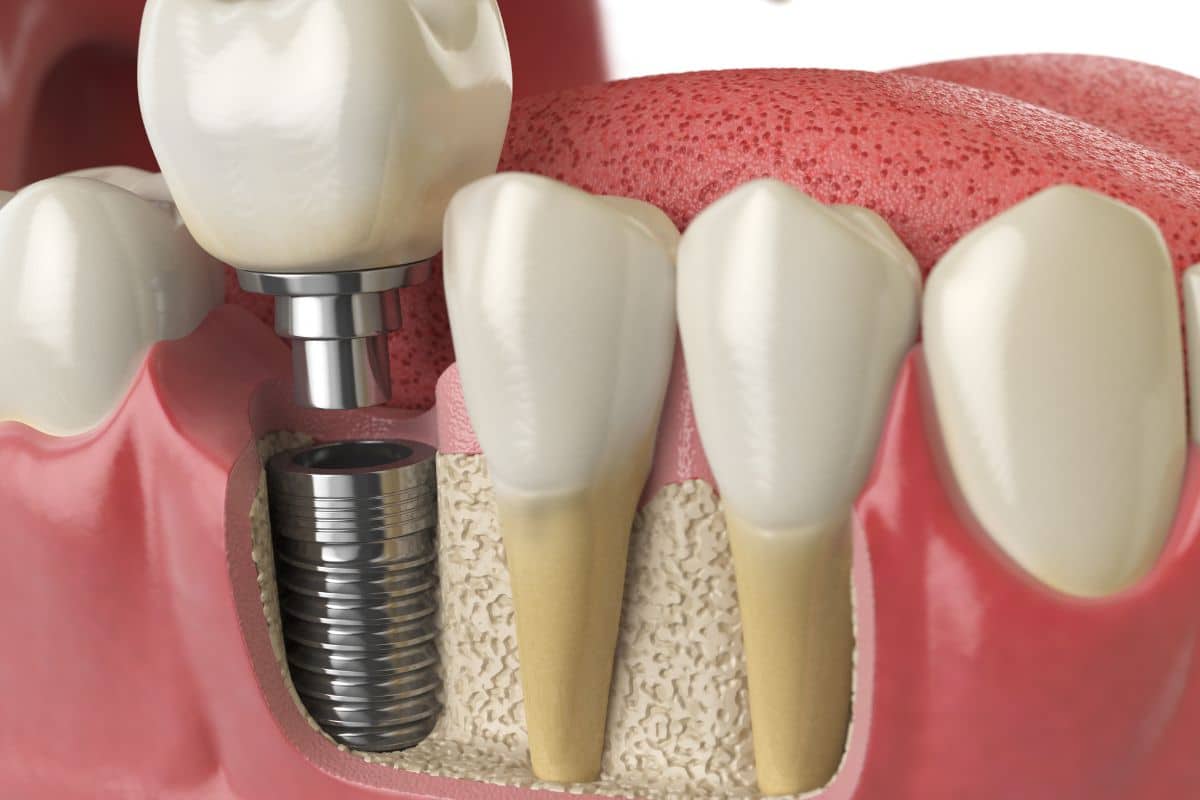
As the bone disappears, the vertical height of your face can actually begin to shrink. This is why people who have lost several back teeth often develop deep folds around the mouth and a more prominent, pointed chin. Replacing the tooth with a bridge or a removable partial denture might help you chew, but these options do not stop bone loss. Only a solution that mimics the root of a tooth can provide the necessary stimulation to keep the jawbone intact. We often discuss these biological benefits when patients ask about dental implants, as the titanium post acts as a synthetic root that integrates directly with the bone.
Preventing the “Domino Effect” in Your Mouth
Once the teeth begin to tilt and the bone begins to thin, the cost and complexity of fixing the problem rise significantly. A straightforward tooth replacement can become a multi-step process. It involves bone grafts to rebuild the ridge or orthodontic work to move shifted teeth back into their original positions. By acting early, you preserve the natural alignment of your smile and prevent the “domino effect” from causing more of your teeth to come down.
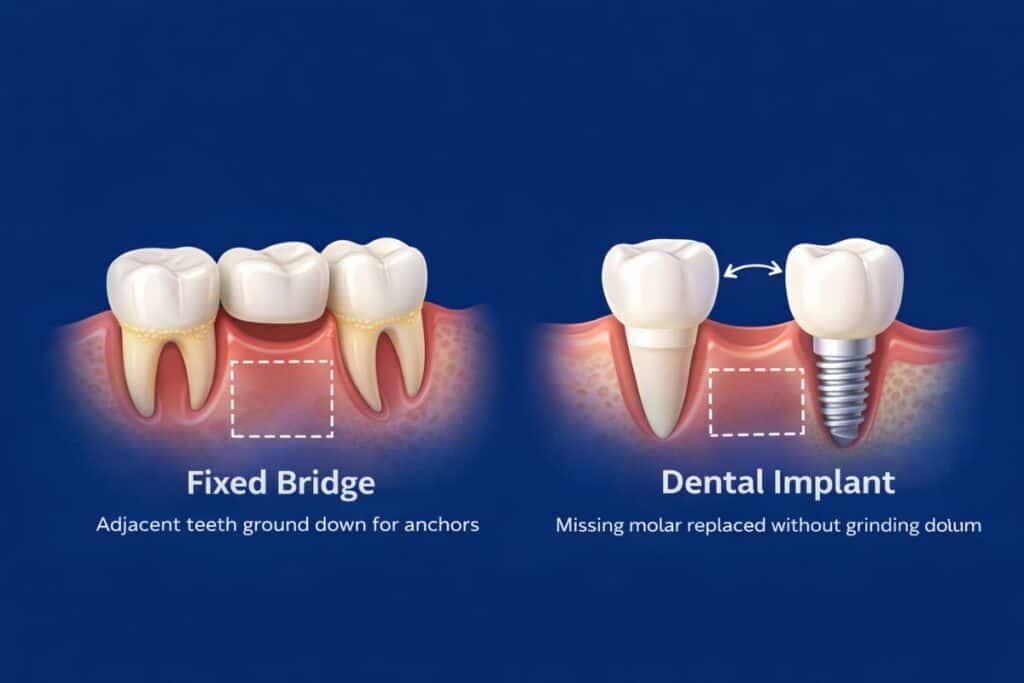
Modern dentistry offers several ways to fill gaps, but longevity and comfort are usually our patients’ top priorities. A fixed bridge requires grinding down two perfectly healthy adjacent teeth to serve as anchors, which can make those teeth more vulnerable to problems later on. In contrast, choosing dental implants in Elgin allows us to replace the missing molar without touching the neighboring teeth, making it a much more conservative and long-term investment in your health.
Restoring Your Quality of Life
Living with a missing molar often means subconsciously avoiding certain foods. You might find yourself skipping crunchy vegetables or tough proteins, which can eventually impact your overall nutrition. Furthermore, the constant shifting of your bite can lead to Temporomandibular Joint (TMJ) disorders. People deserve to enjoy a full range of their favorite cuisines without worrying about a painful or unstable bite.
Restoring your molar isn’t just about the tooth itself; it’s about the peace of mind that comes with knowing your dental foundation is secure. When your bite is aligned, your jaw muscles can relax, your remaining teeth stay in their proper lanes, and your facial structure remains supported.
Choosing to replace a missing molar is a decision your future self will thank you for. It is the difference between maintaining a healthy, stable mouth and dealing with a lifetime of shifting teeth and disappearing jawbone. We are here to help you understand your options and choose the path that best fits your lifestyle and health goals.
Contact the team at Northeast Family Dental Care Elgin today to discuss how we can help you regain full function and protect your oral health for years to come.
People Also Ask
1. Is it harder to replace a molar that has been missing for many years?
It can be more complex because the bone in that area tends to thin out over time. However, it is rarely impossible. We can often perform a “sinus lift” or a bone graft to create enough space for a replacement tooth even years after the initial loss.
2. Do missing molars affect my speech?
While front teeth are more critical for certain sounds, molars play a role in the resonance and “fullness” of your voice. They also help keep the tongue in the correct position. If several molars are missing, you might notice a slight change in the clarity of your speech or a whistling sound.
3. Can a missing back tooth cause a “crooked” smile at the front?
Yes. As the back teeth tilt and shift into the empty space, they create a “shunting” effect that pushes the front teeth out of alignment. This can cause crowding or gaps to appear in your social smile, even though the original problem was in the back of your mouth.
4. Is the recovery for a molar replacement different from other teeth?
Generally, the process is very similar. Molars have larger roots, so the replacement might involve a slightly wider post, but the healing time and post-operative care remain the same. Most people are back to their normal routines within a day or two
Recent Posts

Oct. 12, 2026
Your Smile Makeover Results: How Long They Actually Last
Oct. 05, 2026
What Actually Happens During Your Full-Mouth Restoration Appointment

Sep. 28, 2026
Is Your Missing Tooth a Good Candidate for a Bridge?

Sep. 21, 2026
Severe Tooth Pain: Which Emergencies Need Same-Day Extraction

Sep. 14, 2026