
Pay Online

How to Stop Thumb Sucking and Protect Your Child’s Teeth

March 11, 2026
Thumb sucking is one of the most common habits in early childhood. Many babies begin sucking their thumbs even before birth, and it often continues through infancy and toddler years. For young children, this habit provides comfort and helps them feel secure, especially during sleep or stressful moments. Because it is such a natural reflex, most parents do not worry about it during the early stages of development.
However, as children grow older, parents often start asking an important question: when should thumb sucking stop? If the habit continues for too long, it may begin to affect the way teeth and jaws develop. That is why many families look for safe and supportive ways to guide their children away from the habit.
Parents in Elgin often discuss this concern during routine dental visits, and a pediatric dentist can help monitor how the habit may influence a child’s growing smile. This blog will explain why thumb sucking happens, when it becomes a concern, and practical ways parents can help their children stop the habit gently and safely.
Why Children Suck Their Thumbs
Thumb sucking is a natural behavior that begins early in a child’s development. Babies have a strong sucking reflex that helps them feed and self-soothe. Because of this reflex, many infants instinctively bring their thumbs or fingers to their mouths. It becomes a simple way for them to calm themselves and feel secure.
For many children, thumb sucking becomes part of their routine during moments when they feel tired, anxious, or overwhelmed. A toddler might suck their thumb while falling asleep, watching television, or adjusting to a new environment. The habit often provides comfort during transitions, such as starting daycare or sleeping alone for the first time.
Some children also use thumb sucking when they feel bored or need reassurance. Just like adults may bite their nails or tap their fingers when stressed, children may rely on thumb sucking as a coping behavior.
In most cases, this habit gradually fades as children grow older and develop new ways to manage their emotions. Many children naturally stop between the ages of two and four. As their confidence and independence increase, the need for this comforting habit usually decreases.
Parents should remember that thumb sucking during early childhood is completely normal. The goal is not to stop it immediately but to gently guide children away from the habit if it continues as permanent teeth begin to develop.
When Thumb Sucking Becomes a Dental Concern
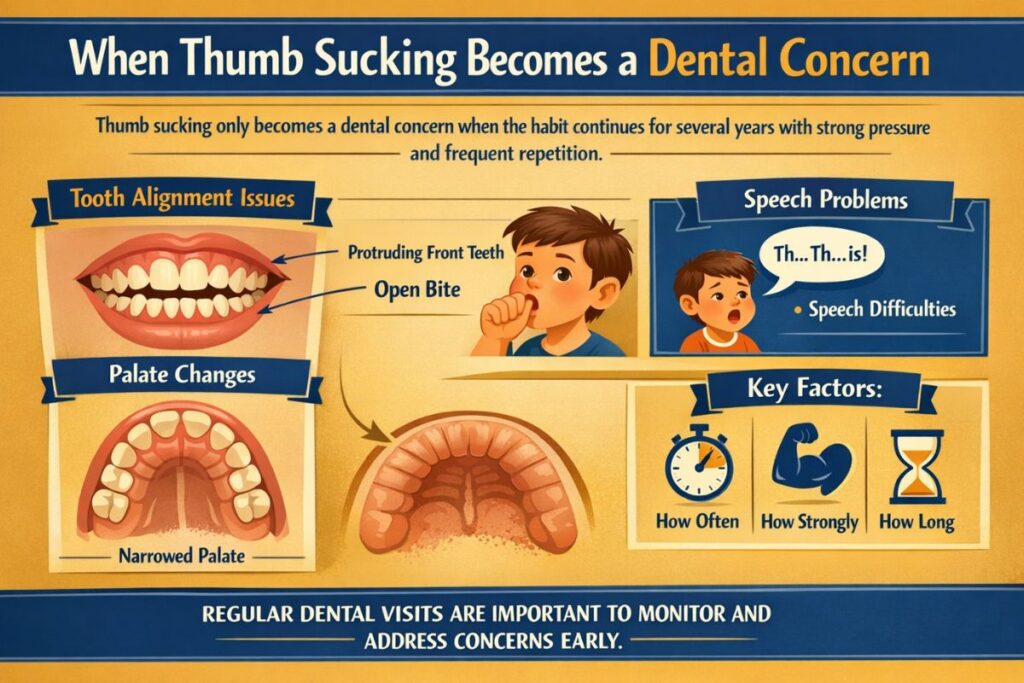
Thumb sucking only becomes a dental concern when the habit continues for several years with strong pressure and frequent repetition. When children suck their thumbs occasionally, the teeth and jaw usually develop normally. However, when the habit becomes frequent or intense, it may start affecting oral development.
One of the most common concerns is tooth alignment. Continuous pressure from the thumb can push the front teeth forward, causing them to protrude outward. Over time, this may lead to bite problems such as an open bite, where the front teeth do not touch when the mouth closes.
Thumb sucking can also influence the shape of the roof of the mouth, known as the palate. Prolonged pressure may cause the palate to become narrower or higher than normal. These changes can affect the way teeth align as permanent teeth begin to erupt.
Another possible concern is speech development. Children who continue the habit for a long time may develop certain speech patterns or pronunciation difficulties.
The impact of thumb sucking depends on three main factors: how often the child sucks their thumb, how strongly they suck, and how long the habit continues. A child who occasionally sucks their thumb may experience little or no effect, while frequent and forceful thumb sucking increases the likelihood of dental changes.
Regular dental visits allow families to monitor these developments and address potential concerns early.
Signs Thumb Sucking Is Affecting Your Child’s Teeth
Parents often wonder how to recognize when thumb sucking may be influencing their child’s dental development. Certain changes in the mouth can signal that the habit is beginning to affect the teeth or jaw.
One of the most noticeable signs is the forward movement of the front teeth. If the upper teeth start to tilt outward or appear more prominent, thumb pressure may be contributing to the change.
Another sign is a bite that does not close properly. When a child bites down, and the front teeth do not meet, it may indicate the development of an open bite. This occurs when the thumb repeatedly pushes the teeth apart over time.
Some children may also experience mild difficulty chewing certain foods if their bite alignment begins to change. While this is less common in younger children, it can develop if the habit continues for several years.
Speech changes can also appear in some cases. Certain sounds may become harder to pronounce when the teeth or palate shift due to repeated thumb pressure.
Parents may also notice irritation or dryness on the thumb itself. Constant moisture and friction can sometimes cause redness or rough skin on the thumb or finger used for sucking.
If any of these signs appear, it may be helpful to schedule a dental evaluation. A pediatric dentist in Elgin can examine the child’s bite, monitor tooth development, and determine whether the habit is beginning to affect oral health.
Early monitoring helps families address concerns before they develop into larger orthodontic issues later.
How Thumb Sucking Affects Dental Development
When thumb sucking continues for an extended period, it can influence how a child’s teeth and jaws grow. The developing mouth is flexible, which means repeated pressure can slowly guide teeth into new positions.
The most common effect is the outward movement of the upper front teeth. When a thumb rests against these teeth repeatedly, it pushes them forward. At the same time, the lower teeth may tilt inward, creating an uneven bite.
Thumb pressure can also affect jaw growth. The constant pressure on the palate may cause the upper jaw to become narrower over time. This can lead to crowding of teeth as permanent teeth erupt.
Another possible effect is the development of an open bite. In this situation, the front teeth do not meet when the child closes their mouth. This can influence chewing and speech patterns.
Children who continue thumb sucking after permanent teeth begin to erupt may eventually require orthodontic care to correct alignment problems. The earlier the habit stops, the lower the likelihood of needing complex treatment later.
Regular dental checkups help track how a child’s mouth is developing and allow families to take action before changes become significant.
Gentle Ways Parents Can Help Stop Thumb Sucking
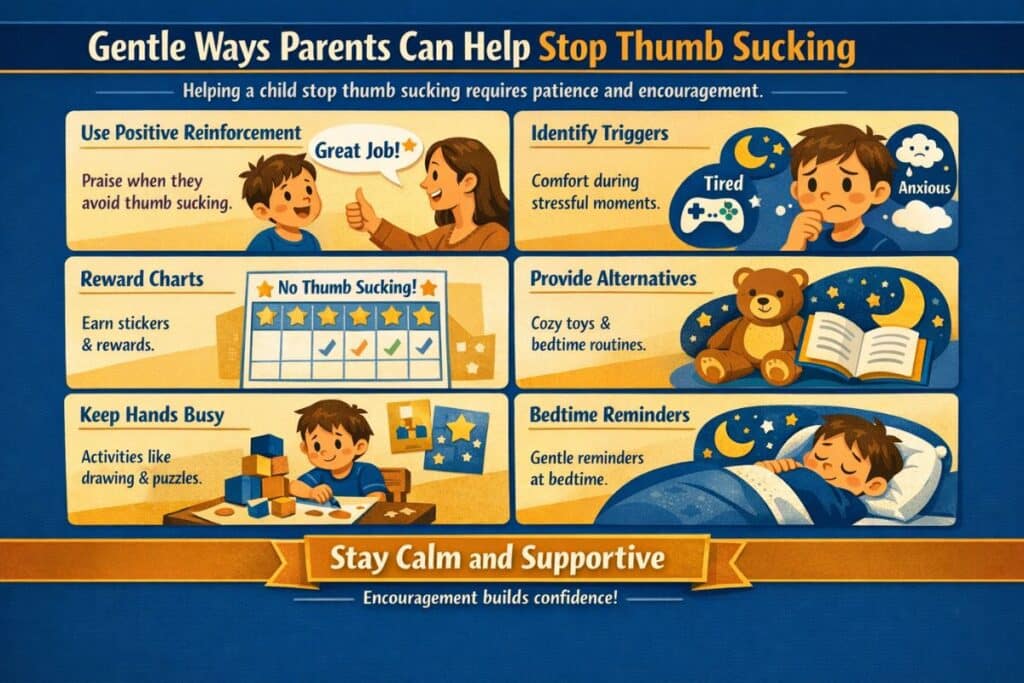
Helping a child stop thumb sucking requires patience and encouragement. Children often respond best to positive guidance rather than pressure or punishment.
One of the most effective approaches is positive reinforcement. Parents can praise children when they avoid the habit during certain times, such as while watching television or during playtime. Recognizing small successes builds motivation.
Understanding triggers can also help parents guide their children. Many children suck their thumbs when they feel tired, bored, or anxious. Offering comfort during stressful moments can reduce the need for the habit.
Reward charts can be helpful for older toddlers and preschoolers. For example, children can earn stickers or small rewards when they go for a certain amount of time without thumb sucking.
Providing alternative comfort habits is another helpful strategy. A favorite stuffed toy, bedtime story, or relaxing routine can replace the need for thumb sucking during sleep.
Parents can also encourage activities that keep children’s hands busy. Drawing, puzzles, building blocks, and crafts give children something else to focus on.
Bedtime reminders may also help. A gentle reminder before sleep can encourage children to fall asleep without their thumb.
Most importantly, parents should remain calm and supportive. Encouragement helps children feel confident in overcoming the habit.
When Professional Help May Be Needed
Sometimes children struggle to stop thumb sucking on their own. If the habit continues beyond the age of five or signs of dental changes appear, professional guidance may be helpful.
A pediatric dentist in Elgin can evaluate how the habit is affecting the child’s teeth and jaw development. During a dental visit, the dentist may monitor bite alignment and discuss strategies with parents.
In many cases, simple behavioral techniques can help children stop the habit. Dentists may suggest motivational approaches or gentle reminders that encourage children to avoid thumb sucking.
For children who continue the habit despite encouragement, habit-breaking appliances may be recommended. These small dental devices make thumb sucking less comfortable and help children break the pattern.
Professional guidance also helps reassure parents. Every child develops differently, and dental professionals can provide personalized recommendations based on the child’s age and oral development.
Preventing Dental Problems from Thumb Sucking
Preventing dental problems begins with early awareness and supportive guidance. Parents who monitor their child’s habits can often help them stop thumb sucking before it begins affecting dental development.
Early dental visits play an important role in prevention. Routine checkups allow dentists to observe how a child’s teeth and jaw are growing. If thumb sucking continues longer than expected, early monitoring helps address concerns quickly.
Encouraging healthy daily habits also supports proper development. Consistent oral hygiene routines and regular dental visits help keep a child’s teeth strong and healthy.
Sleep habits may also influence thumb sucking. Establishing a calming bedtime routine can help children fall asleep without relying on the habit for comfort.
Parents can also help children manage emotional triggers. Offering reassurance during stressful situations reduces the need for self-soothing habits.
Local families often discuss these concerns during routine visits at Northeast Family Dental Care, where children’s dental growth can be monitored as they grow.
Thumb sucking is a natural habit during early childhood, and most children eventually outgrow it on their own. However, guiding children to stop the habit at the right time helps protect their developing teeth and jaw alignment.
Parents can support their children by using gentle encouragement, identifying triggers, and providing positive alternatives to the habit. Patience and consistency often make the biggest difference in helping children break the pattern.
If the habit continues longer than expected or begins affecting tooth alignment, professional dental guidance can provide helpful solutions. Families who want to protect their child’s smile can visit Northeast Family Dental Care to discuss concerns and schedule a dental evaluation. Early guidance helps children maintain healthy smiles as they grow.
What People Ask
1. At what age should children stop thumb sucking?
Most children naturally stop thumb sucking between ages two and four. If the habit continues after age five, parents should consider guidance from a dental professional.
2. Can thumb sucking permanently damage teeth?
Prolonged thumb sucking can affect tooth alignment and jaw development. The risk increases when the habit continues after permanent teeth begin to emerge.
3. Is thumb sucking worse than using a pacifier?
Pacifiers are usually easier for parents to control and remove gradually. Thumb sucking can be harder to stop because the thumb is always available.
4. Does thumb sucking affect speech development?
In some cases, long-term thumb sucking may influence tongue position and bite alignment. These changes can contribute to speech difficulties in certain children.
5. How can parents encourage children to stop thumb sucking?
Positive reinforcement and gentle reminders often work best. Reward charts, encouragement, and identifying triggers can help children gradually stop the habit.
Recent Posts
Mar. 11, 2026
How to Stop Thumb Sucking and Protect Your Child’s Teeth
Feb. 16, 2026
Why Is It Critical to Replace a Missing Molar Even If It’s Not Visible When I Smile?

Jan. 28, 2026
What Should I Do If My Child Knocks Out a Permanent Tooth in Elgin?
Dec. 10, 2025
Can Invisalign Fix Overbite? How It Solves Complex Dental Issues in Elgin, IL

Dec. 03, 2025